
Winter truck crash prevention depends on understanding how weather, vehicle size and driver decisions interact. A tractor-trailer requires different stopping space and maneuvering time from a passenger car. In late 2026 and early 2027, snow, ice, freezing rain and reduced visibility can turn ordinary traffic situations into serious hazards.
This guide focuses on prevention rather than attributing blame for any particular collision. Commercial drivers have specialized training and obligations, but people driving nearby also influence safety. The most useful advice is to leave room, avoid abrupt maneuvers and respond to current road conditions instead of assuming the speed limit is always a safe operating speed.
Why Winter Creates Different Risks for Heavy Vehicles
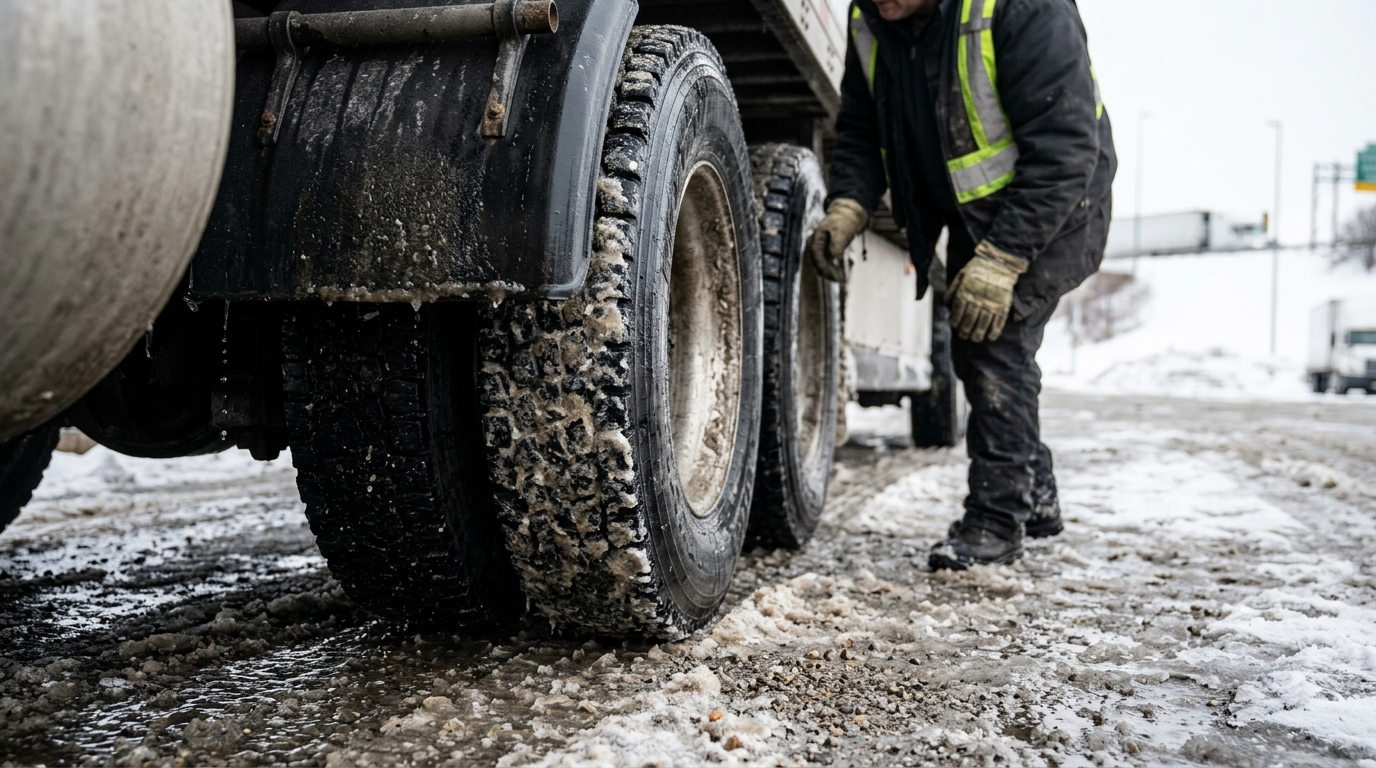
Heavy vehicles can maintain momentum on a clear highway, yet extra mass and long vehicle dimensions become significant when stopping or changing direction. Federal Motor Carrier Safety Administration guidance stresses the need for more stopping distance and careful wide turns. Weather can reduce tire grip for every vehicle around the truck.
Weather and Vehicle Mass Change the Margin
Ice is particularly dangerous because a road can look merely wet. Bridges and shaded segments may cool faster than nearby pavement. Avoid hard braking and abrupt steering on slippery surfaces. Drivers should follow weather warnings and delay nonessential trips when conditions make safe travel impossible.
Passenger-car drivers should remember that a large vehicle’s size changes the surrounding road space. A truck needs a longer area to maneuver, and its driver may not have a clear view of a vehicle lingering near the sides. Do not use a truck as a windbreak or stay beside it through a bend when another lane is available. Before passing, make sure the roadway permits it and there is enough clear distance to complete the move smoothly. Abruptly cutting back in reduces the truck driver’s margin.
Stopping Distance Depends on Conditions
Blind spots are another source of conflict. A driver in a passenger car may disappear from the truck operator’s mirrors while traveling beside the trailer. Do not linger beside a large vehicle, especially in wind or when road spray limits visibility. Pass only when legal, necessary and safe, with adequate room to complete the maneuver.
Blind Spots and Lane Changes in Low Visibility
Lane changes deserve extra patience. A car that cuts directly in front of a truck may remove the space the truck operator was using to maintain a safe stopping margin. Signal early, avoid weaving through traffic and be cautious around truck turns. A larger gap is not wasted road space; it is part of the safety system.
What Passenger-Car Drivers Should Know
Commercial operators should complete required inspections and review brakes, tires, lights, wipers and weather equipment within applicable rules. Dispatchers and fleet managers can support safer decisions by adjusting schedules when roads become hazardous. Pressure to meet an arrival time should not turn a winter storm into a predictable crash risk.
Low visibility can make an already difficult interaction worse. Road spray, snowfall, glare, and darkness may hide brake lights or lane markings. A driver who sees the truck ahead but cannot clearly judge the gap should not assume the distance is adequate. Increase following room and avoid sudden braking. If lanes are icy or covered in slush, smooth steering becomes particularly important. Even well-equipped vehicles cannot overcome every combination of reduced grip and limited sight distance, so postponing a trip may be the safest choice.
Avoid Driving Beside a Truck for Long Periods
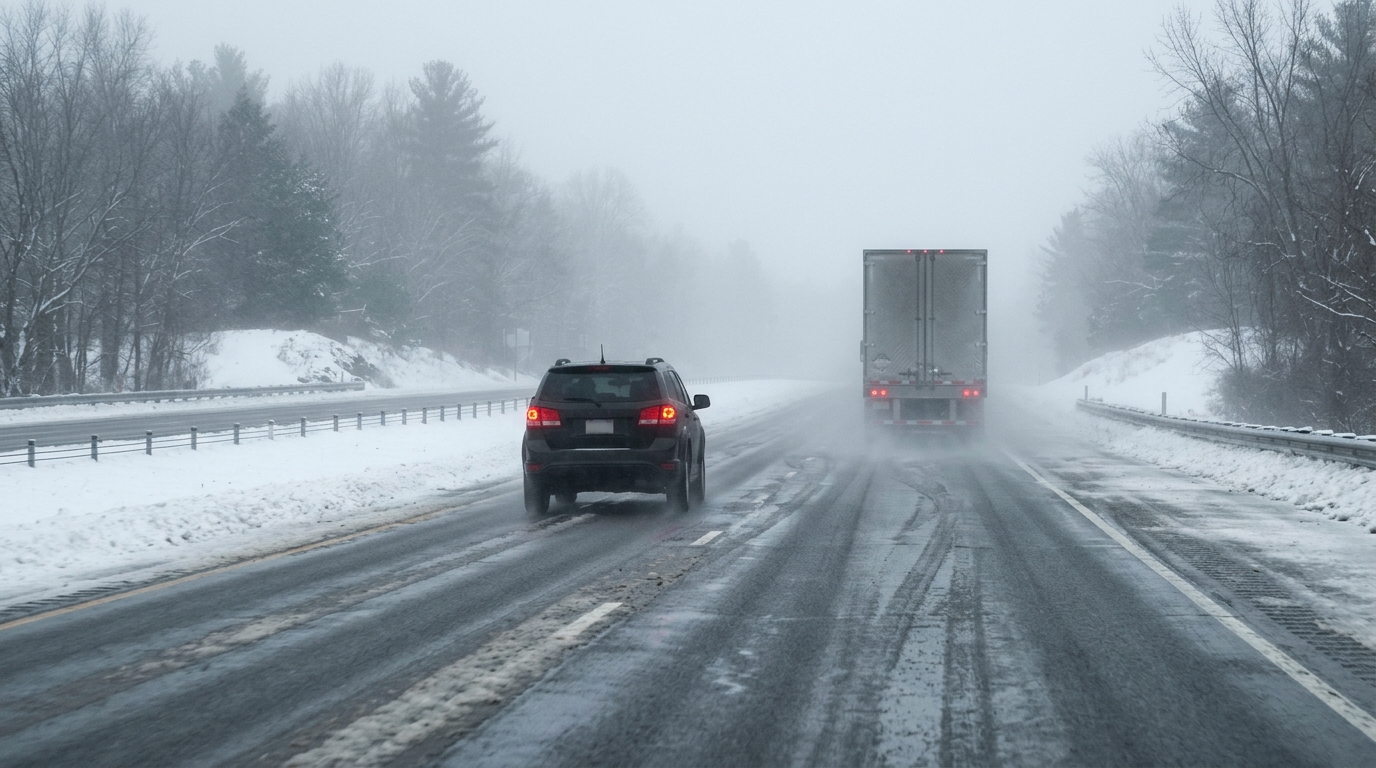
Imagine a highway where blowing snow suddenly reduces visibility. The immediate goal is not to keep pace with traffic. Gradually reduce speed, increase following distance and look for a safe place to stop if conditions worsen. Avoid stopping in an active lane simply because the road ahead looks difficult.
A Winter Road-Safety Checklist
Passenger vehicle drivers can help by recognizing the wide-turn needs and slow acceleration of heavy trucks. At intersections and ramps, give trucks extra time to complete permitted maneuvers. Do not drive into gaps beside a trailer that may be needed for turning clearance.
For an official reference, review Federal Motor Carrier Safety Administration truck-safety guidance. It provides a useful source to check alongside the practical guidance here. Confirm current information directly rather than relying on an undated copy or an unverified social post.
How Fleets and Drivers Prepare
When a road is officially closed, do not bypass barricades or rely on a navigation shortcut that may lead onto a more hazardous secondary road. Use verified agency updates and follow emergency instructions. In a collision, move to safety if possible and contact emergency services as appropriate rather than approaching a damaged truck without assessing traffic and cargo risks.
Good incident reporting separates general risk education from claims about a particular collision. If a road closes, follow traffic-control instructions rather than using a speculative detour shared online. For a crash you witness, put personal safety and emergency notification first. Notes about conditions can be useful, but avoid filming while driving or interfering with responders. Fleet operators have their own training and inspection obligations; private motorists can help by respecting truck space and following official road updates during storms.
Use the following checklist as a decision record. Complete the steps in a sensible order, make notes about any unresolved issue, and return to them before acting. The objective is to improve the quality of the next decision—not to claim that a single list replaces local rules or individual circumstances.
- Check weather and official road advisories before departure. Put the relevant date and location beside the result, so a future reader knows exactly when and where the information applies. Keep the original source available for comparison.
- Increase following distance around commercial trucks. Use this step to make a specific decision rather than collecting facts without a purpose. Where the answer is uncertain, choose the safer or more conservative option.
- Stay out of truck blind spots whenever possible. Keep related documents, photographs, or confirmations together in a clearly named folder. A simple record can prevent details from being lost when circumstances change.
- Never cut in sharply ahead of a large vehicle. If other people are involved, agree in advance who is responsible for this part of the plan. Do not rely on somebody else to guess that it has been completed.
- Allow extra space for turns and lane changes. Review the result whenever conditions or requirements change. An earlier check may be useful history, but it is not automatic proof of what applies today.
- Follow closures and delay travel when conditions deteriorate. Know when to stop and ask an official source or qualified professional for help. A checklist can organize your judgment, but it cannot eliminate every risk.
Responding Safely to a Road Closure
Winter truck crash prevention is a shared responsibility built on time and space. Slowing down, avoiding blind spots and planning around the forecast are practical decisions that reduce unnecessary exposure for both professional drivers and the surrounding public.
For more context on a related issue, read our our analysis of distracted-driving crash risks. That existing article approaches a different part of the subject; compare its scope before applying advice across situations.
Common questions
Do trucks always stop more slowly than cars? Vehicle design, loading, speed, tires and surface conditions matter; give large trucks substantial space rather than relying on a single comparison. Check the current source and the relevant location before acting; a general guide cannot account for every change in operating conditions, rules, or individual circumstances.
Is a wet-looking bridge always safe? No. Some surfaces may be icy even when they appear only damp. Keep the underlying documents and dates accessible if you need to discuss the issue later. When the stakes are significant, obtain advice from an appropriate qualified source.
The value of this winter truck crash prevention guide is in a habit of verification: decide what matters, check the most relevant source, preserve the result, and update a plan when new facts appear. The underlying steps should remain useful even after the season or publication year has passed.