
Female crash test dummies in 2026 are receiving renewed attention after federal researchers published findings about differences in vehicle crash injury risks. For decades, safety engineers have used test devices, crash simulations, and real-world collision records to understand how vehicles protect their occupants.
However, crash protection does not affect every person in the same way. Occupant size, seating position, age, restraint systems, and vehicle design can influence injury outcomes.
On January 8, 2026, the National Highway Traffic Safety Administration released new research comparing injury risks for women and men in passenger vehicle crashes. The findings support continued development of advanced crash test equipment that represents a broader range of occupants.
Understanding the research can help drivers interpret safety headlines without assuming that every vehicle presents the same risk.
What NHTSA’s 2026 Study Found About Crash Injuries
NHTSA examined nationally representative crash investigation data to evaluate injury outcomes in different collision situations. The researchers considered frontal, side, rear, and rollover crashes, along with occupant characteristics and restraint conditions.
The study used crash information gathered during 2000–2015 and 2017–2022. Therefore, the January 2026 publication date does not mean every crash in the analysis occurred during 2026.
Researchers evaluated 150 injury models. They found a statistically significant higher risk for women in 26 percent of those models. The results varied across crash types and injury categories.
Why the findings are important for vehicle safety
NHTSA reported several notable differences involving moderate or more serious injuries. The agency identified a 46 percent higher injury risk for women in frontal crashes and a 55 percent higher risk in rollover crashes within the relevant comparisons.
The study also found higher risks involving certain lower-extremity injuries. For example, NHTSA reported a 62 percent higher risk of lower-extremity injuries in frontal crashes and a 128 percent higher risk involving feet and ankles.
These percentages describe relative differences in specific study findings. They do not mean that 46 percent of women experience injuries in frontal crashes.
Moreover, a higher relative risk does not tell an individual driver the exact probability of injury in a particular collision.
Why injury risks differ by crash type
A frontal crash places different forces on the body than a rear impact or rollover. The direction and severity of the collision affect how occupants move within the passenger compartment.
Seat belts, airbags, vehicle structure, and seating position help control that movement. Their effectiveness depends on how the complete protection system responds during a crash.
The driver’s age and physical characteristics can also influence injury outcomes.
NHTSA’s analysis found that older age groups generally faced higher risks of moderate-to-severe or fatal injury, with some differences by crash category.
These findings demonstrate why safety researchers study many scenarios instead of relying on a single test configuration.
How to interpret the study’s percentages correctly
Researchers use statistical models to compare groups while accounting for factors included in their analyses.
A reported increase in relative risk does not automatically reveal the baseline risk. Without that context, readers may misunderstand the size of the difference.
Similarly, one study finding should not become a sweeping claim about every make or model.
The research examined patterns across vehicles and crash circumstances rather than producing a simple ranking of the safest cars for women.
For the agency’s explanation, read the official NHTSA announcement about female crash injury research.
How advanced female crash test dummies may improve testing
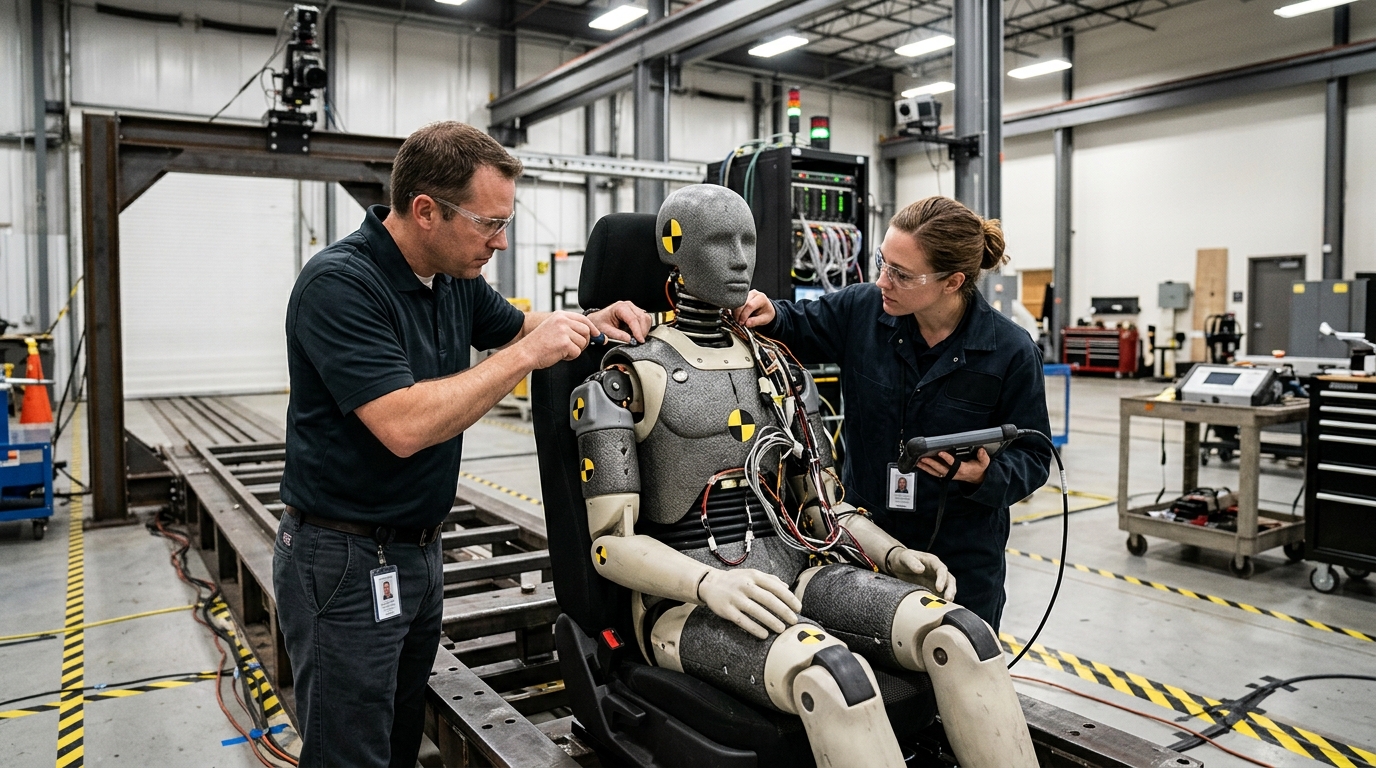
Crash test dummies contain sensors that measure forces and movement during controlled collisions. Engineers use those measurements to evaluate how safety equipment performs.
For many years, vehicle testing relied heavily on devices based on average male body dimensions. Engineers also used smaller occupant models, but researchers have continued developing more advanced tools.
NHTSA’s ongoing work includes the THOR-05F frontal crash test dummy and the WorldSID-05F side-impact device. These tools aim to provide more detailed measurements for smaller occupants.
Better measurements can help engineers understand injury mechanisms that older equipment may represent less precisely.
What makes newer crash test devices different?
Advanced test devices can include improved sensors, more detailed body structures, and measurements designed to capture additional injury information.
For example, engineers may examine how the head, chest, pelvis, and lower extremities respond during different crash conditions.
Developers can then compare test results with crash investigation data and other research tools.
However, introducing an advanced dummy does not automatically change every federal vehicle test. Regulators must establish the relevant procedures, performance criteria, and requirements.
Researchers also use computer models and other methods alongside physical crash tests.
The goal is to improve the evidence available for designing and evaluating occupant protection systems.
What the Research Means for Drivers and Car Buyers
Consumers should view the 2026 study as a reason to examine vehicle safety carefully, not as proof that modern vehicles provide inadequate protection.
NHTSA has separately reported that differences in fatality risk between women and men have narrowed in newer vehicles.
Its earlier analysis found that the overall female-to-male fatality risk difference fell to 6.3 percent for 2010–2020 vehicles and 2.9 percent for 2015–2020 vehicles in the study’s comparisons.
These findings suggest progress while also showing why researchers continue investigating differences in injury outcomes.
How to compare vehicle safety features more effectively
Start with independent crashworthiness information and official vehicle safety ratings. Examine the results for the exact model and model year you want to purchase.
Pay attention to frontal and side crash protection, available safety equipment, and crash avoidance technology.
However, avoid assuming that one overall rating captures every occupant’s experience in every collision.
Crash tests use defined conditions. Real-world crashes involve different speeds, angles, vehicle types, and occupant characteristics.
For additional context, our driverless vehicle safety analysis discusses why transportation technology requires careful evaluation rather than broad assumptions.
Build a practical vehicle safety checklist
First, check official safety ratings and recall information before buying a new or used car.
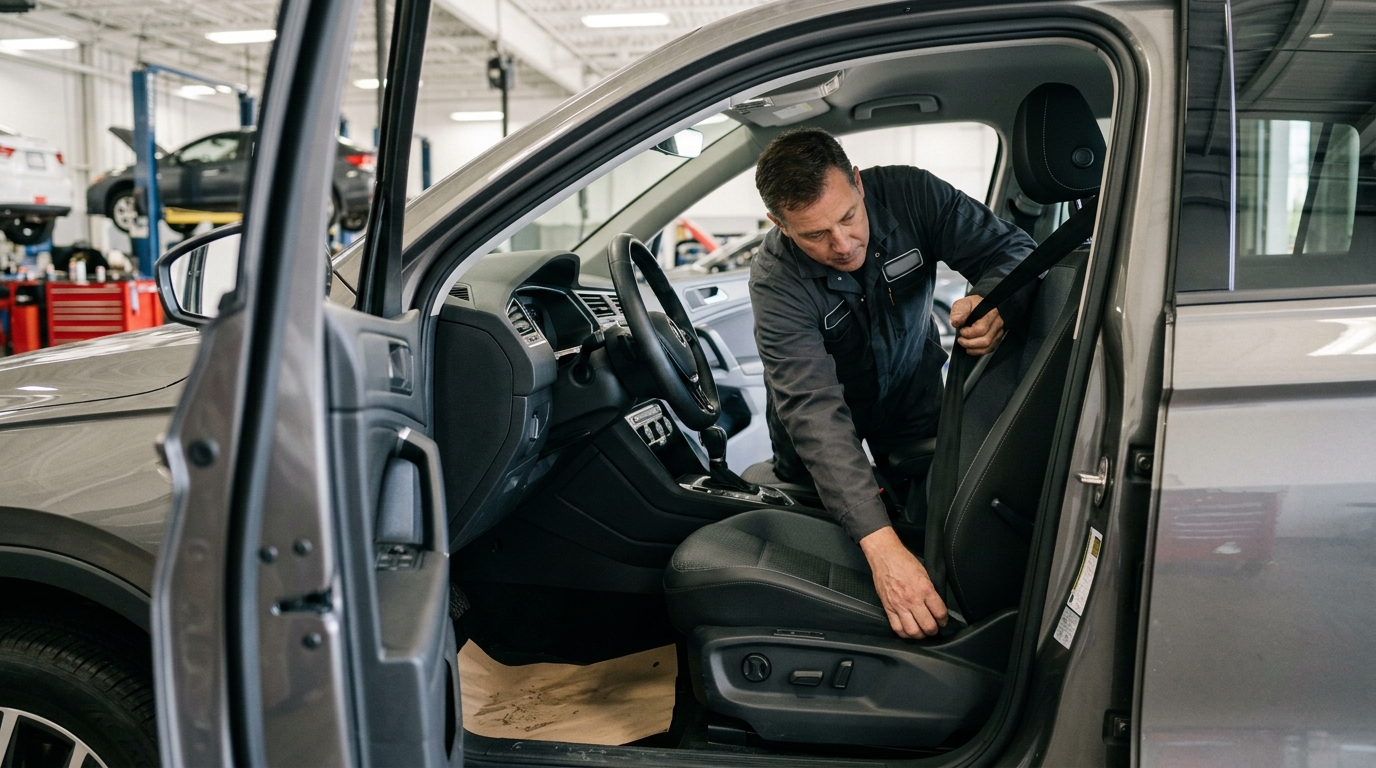
Next, confirm that the seat belts, airbags, head restraints, and other important safety components function correctly. Investigate warning lights or evidence of unrepaired crash damage.
Adjust the driver’s seat so you can operate the controls comfortably while maintaining a suitable distance from the steering wheel and airbag.
Follow the vehicle manufacturer’s instructions for seating position, head restraints, and seat belt use.
Make sure every passenger uses the appropriate restraint for their size and age.
For children, choose a properly installed child restraint that matches their age, height, weight, and the manufacturer’s limits.
These actions cannot eliminate crash injuries, but they help occupants use the protection systems as intended.
Vehicle maintenance matters as well. Inspect tires, brakes, steering components, lights, and other systems according to the manufacturer’s schedule.
Some crashes involve mechanical problems, while others result from driver decisions or roadway conditions. Understanding both categories supports a more complete approach to prevention.
Even a vehicle with strong crash-test performance cannot compensate for reckless driving.
Drivers should follow speed limits, maintain appropriate following distances, and adjust their driving to weather and traffic conditions.
Never drive while impaired. Alcohol and other impairing substances can affect judgment, coordination, and reaction time.
Our distracted driving report explains how mobile phones and other activities take attention away from important driving tasks.
Vehicle safety also involves protecting pedestrians, cyclists, and other people outside the passenger compartment.
Modern safety technology may help reduce some collisions, but drivers must still watch carefully for vulnerable road users.
Our pedestrian safety analysis examines recent national trends and explains why roadway design remains important.
Manufacturers can improve vehicle protection through changes to structures, airbags, seats, restraints, and electronic safety features.
Researchers can support those improvements by identifying where real-world injury patterns differ from laboratory expectations.
Crash testing therefore serves two related purposes. It helps evaluate existing vehicles and provides evidence that engineers can use in future designs.
Advanced female crash test dummies may contribute to that process by improving the measurement of forces on smaller occupants.
Still, crash injury differences involve more than occupant sex alone. Body size, age, seating position, restraint use, and collision characteristics all deserve consideration.
Responsible reporting should reflect that complexity rather than turning the findings into a claim that every woman faces the same risk.
Consumers can also support vehicle safety by reporting suspected defects to NHTSA.
Reports can help federal investigators identify possible safety problems, although an individual complaint does not establish that a defect exists.
Before purchasing a used vehicle, review available recall records using its vehicle identification number. Arrange an independent inspection when the vehicle’s condition or repair history raises questions.
Ask whether previous crash repairs affected airbags, seat belt pretensioners, structural components, or electronic safety equipment.
Do not assume that a clean-looking exterior proves the vehicle’s safety systems remain undamaged.
When comparing safety ratings, remember that different organizations may use different tests and scoring methods.
A rating from one program should not automatically be treated as equivalent to a rating from another program.
Likewise, ratings may change when testing programs introduce new evaluation criteria.
Use current information for the specific model year and understand what the tests actually measure.
For national accident statistics, visit our accident reporting archive, which covers several major road safety issues.
Ultimately, the 2026 federal research shows why crash safety remains an active field of study.
Manufacturers have improved occupant protection over time, yet researchers continue identifying differences in injury outcomes that deserve attention.
Female crash test dummies in 2026 are part of that broader effort to improve vehicle testing and understand real-world collision injuries.
Drivers can make better decisions by reviewing credible safety ratings, maintaining their vehicles, using restraints correctly, and practicing safer driving habits.
Meanwhile, researchers and regulators can use better evidence to guide future safety improvements for a wider range of vehicle occupants.
Editorial disclaimer: This article provides general safety information. Study findings describe population-level patterns and cannot predict an individual’s injury outcome in a crash.