
Distracted driving in 2026 remains one of the most persistent dangers on U.S. roads. Vehicles are becoming smarter, phones offer more safety settings, and public awareness campaigns have been running for years. Even so, thousands of people are still killed and hundreds of thousands are injured in crashes involving distracted drivers.
According to the National Highway Traffic Safety Administration, 3,208 people were killed in crashes involving distracted drivers in 2024, and 315,167 people were injured. NHTSA also reports that distracted drivers were involved in 8% of fatal crashes that year. Those numbers are serious on their own, but federal officials warn that distraction is difficult to prove after a crash, which means the true impact may be higher.
The problem is also broader than texting. A driver can be distracted by social media, navigation, a phone call, food, passengers, vehicle controls, or anything else that takes attention away from driving. Our Road & Traffic Safety section tracks these risks, while the Accident Statistics hub explains how national crash data should be interpreted.
What Distracted Driving in 2026 Data Shows About the Risk
Phones Combine Several Types of Distraction at the Same Time
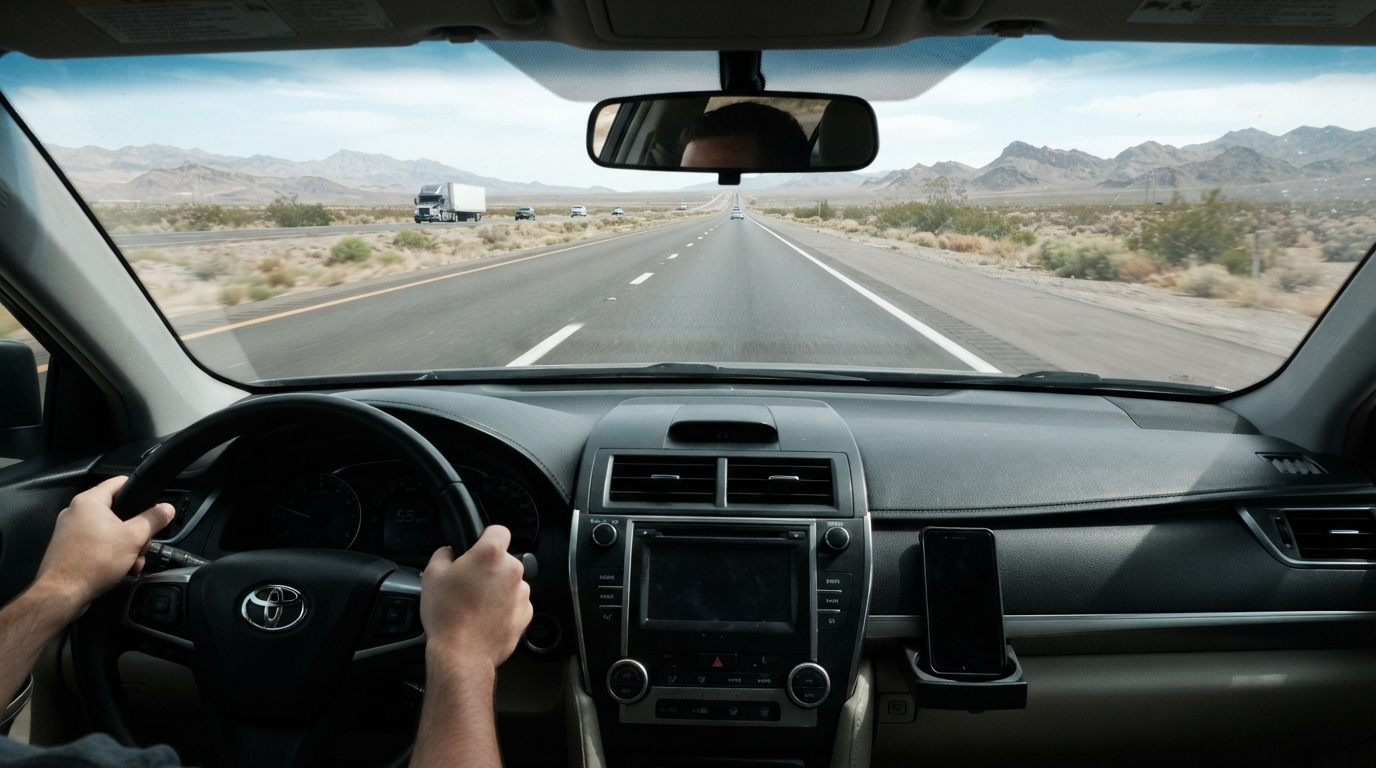
Driving requires a continuous stream of decisions. A driver has to monitor traffic, maintain speed and lane position, recognize signs and signals, watch for pedestrians and cyclists, and react to unexpected movement. A smartphone can interrupt several of those tasks at once.
Safety researchers commonly describe distraction in three broad ways: visual distraction takes the eyes away from the road, manual distraction takes the hands away from the driving task, and cognitive distraction takes the mind away from driving. Texting and many social-media activities can combine all three.
Five Seconds Can Equal a Football Field at Highway Speed
NHTSA notes that reading or sending a text can take a driver’s eyes off the road for about five seconds. At 55 mph, a vehicle travels roughly the length of a football field during that time. The driver is still moving through an environment that can change every second, but without fully watching it.
A vehicle ahead can brake. A traffic light can change. A pedestrian can enter a crosswalk. Debris can appear in the lane. Even if the driver looks up in time to notice the hazard, those lost seconds may have reduced the distance available to react and stop.
That is why distraction becomes especially dangerous when combined with speed. The faster a vehicle travels, the farther it moves while the driver is not fully engaged. Readers can find more prevention guidance in our Safety Resources hub.
Distracted Driving Is More Than Texting
Texting gets the most attention because it is easy to understand and particularly risky, but it is not the only form of distraction. Scrolling through social media, recording video, entering a destination into navigation, selecting music, reading notifications, eating, grooming, and reaching for objects can all divide attention.
Hands-free technology can reduce some manual and visual demands, but it does not automatically remove cognitive distraction. A complicated conversation or voice interaction can still pull mental attention away from traffic. The safest approach is to complete non-driving tasks before the vehicle moves or wait until the vehicle is safely parked.
Passengers can help. A passenger can become the designated texter, manage navigation, change music, or handle messages. If a driver is alone, enabling Do Not Disturb while driving or placing the phone out of reach can remove the temptation to check a notification.
Distracted Driving Numbers Are Probably an Undercount
Distracted-driving statistics have an important limitation: distraction can be difficult to establish after a collision. A drunk-driving investigation may include a chemical test. Speed may leave physical or electronic evidence. Phone distraction is often less obvious unless investigators obtain a statement, witness account, video, or digital record that confirms it.
A driver may not admit that they were reading a message or looking at an app just before a crash. In other cases, investigators may simply lack enough evidence to identify distraction as a contributing factor. NHTSA officials have repeatedly cautioned that reported distraction totals do not necessarily capture the full scale of the problem.
More Than 32,000 People Died in Distracted-Driving Crashes Over a Decade
NHTSA’s current national campaign reports approximately 32,717 deaths in crashes involving distracted drivers from 2015 through 2024. That long-term total shows that distraction is not a temporary problem created by one phone model or one social-media trend.
The technology changes, but the underlying risk remains the same: attention is a limited resource. New vehicle screens, connected apps, wearable devices, and in-car entertainment can create new demands even as manufacturers develop systems intended to make driving easier.
This also matters as automation becomes more common. As explained in our article on driverless car safety in 2026, a Level 4 robotaxi and a privately owned vehicle with Level 2 driver assistance are not the same thing. Drivers using supervised assistance systems still need to remain engaged. A system that steers or controls speed does not make it safe to scroll through a phone.
How Drivers Can Prevent Distracted Driving Crashes
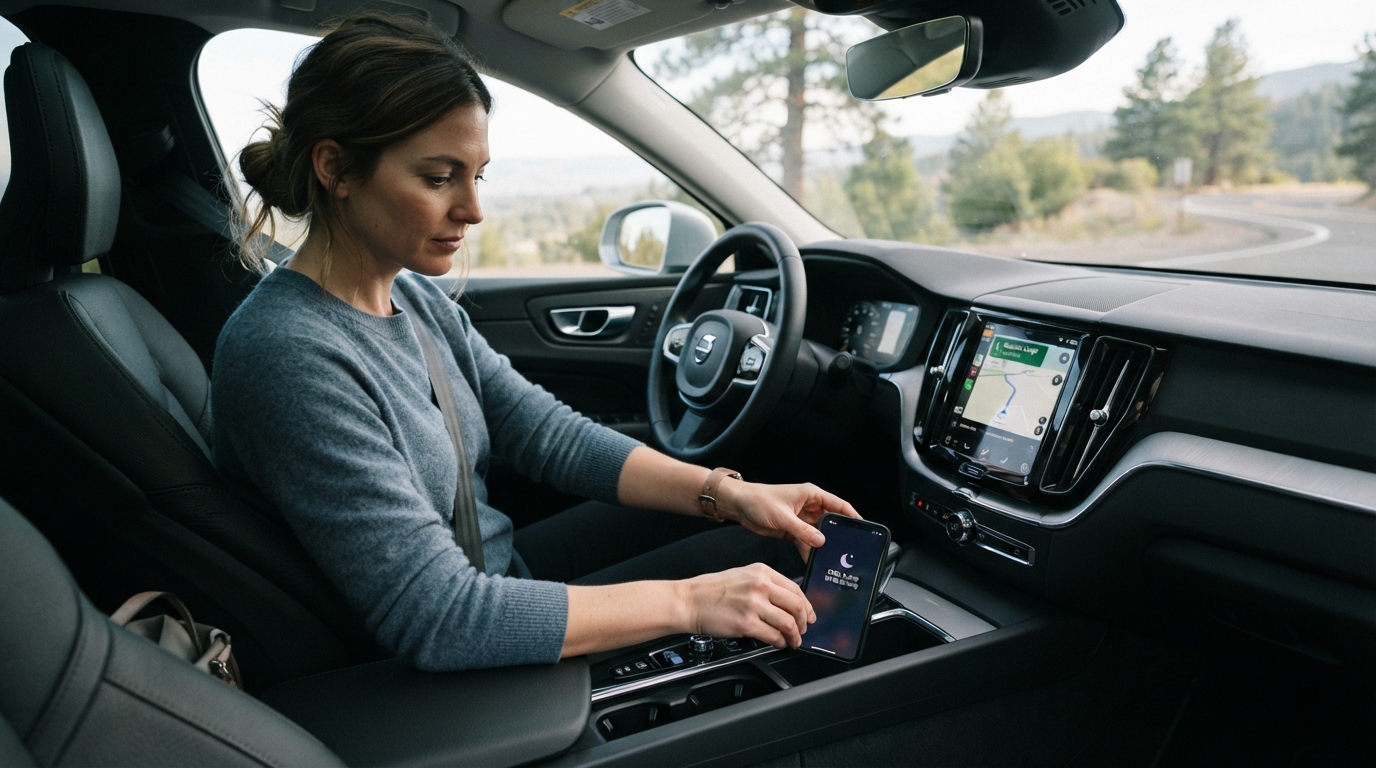
The Most Effective Strategy Is to Remove the Temptation Before Driving
Many distracted-driving crashes begin with a small decision: checking one message, changing one song, answering one notification, or entering one address. Prevention works best when the decision is made before the temptation appears.
Build a Phone-Free Driving Routine
Set navigation before moving. Enter the destination, review the route, and position the phone or display before leaving. If the route needs major changes, pull over somewhere safe rather than programming it while driving.
Silence notifications. Use a phone’s driving mode or Do Not Disturb feature. Notifications are designed to attract attention, so removing the alert makes it easier to keep focus on traffic.
Put the phone out of reach. A phone in a bag, center console, glove box, or other inaccessible location creates a physical barrier between the driver and the impulse to check it.
Let passengers handle communication. When someone else is in the vehicle, that person can respond to messages, manage navigation, or make calls.
Pull over when a task cannot wait. A genuinely urgent message is still safer to handle from a legal parking location than while the vehicle is moving.
Passengers also have a role in prevention. If a driver starts texting or scrolling, speak up. A simple request to put the phone away can prevent the situation from becoming a crash. Parents should model the same behavior they expect from teen drivers because rules are less convincing when young drivers regularly see adults ignore them.
Law enforcement and public campaigns remain part of the strategy as well. NHTSA’s Put the Phone Away or Pay campaign combines public education with high-visibility enforcement of texting and distracted-driving laws. NHTSA reports that texting while driving is prohibited in 49 states as well as Washington, D.C., although the details of phone-use laws vary by jurisdiction.
Technology
Technology may also become part of the solution. At its 2026 Lifesavers Conference, NHTSA said it is exploring mobile telematics that could help smartphones reduce distraction instead of creating it. Vehicle systems can also limit certain screen functions while moving, provide voice controls, and warn inattentive drivers. However, no feature can replace a driver’s responsibility to stay focused when human supervision is required.
Distracted driving can also overlap with other serious crash risks. Alcohol impairment reduces judgment, while distraction diverts attention. Our article on drunk driving in 2026 explains why impairment remains a major factor in fatal crashes. Likewise, our report on U.S. pedestrian deaths shows why vulnerable road users have so little protection when a driver fails to notice them in time.
For current statistics and prevention advice, review the National Highway Traffic Safety Administration’s distracted-driving resources. The federal guidance reinforces a simple principle: safe driving requires full attention.
The numbers make the stakes clear. In 2024, distracted-driving crashes were associated with 3,208 deaths and more than 315,000 injuries. Yet every driver has an immediate tool for reducing that risk. Put the phone away, prepare before the trip starts, and give the road the attention it demands.