
Construction falls in 2026 remain one of the deadliest and most preventable hazards on U.S. jobsites. The latest federal data shows that falls to a lower level caused 389 of the 1,034 construction fatalities recorded in 2024. That means more than one-third of construction deaths were tied to a hazard that employers and workers can often control through better planning, equipment, training, and supervision.
The numbers explain why fall prevention continues to receive national attention. In May 2026, OSHA and NIOSH again promoted the National Safety Stand-Down to Prevent Falls in Construction, encouraging employers to pause work and talk directly with crews about fall hazards. The campaign focuses on a simple message: plan the work, provide the right protection, and train workers to use it correctly.
For employers, supervisors, and workers, the goal is not simply to comply with a checklist. Fall prevention must be built into the job before anyone climbs a ladder, steps onto a roof, works from scaffolding, or approaches an unprotected edge. Our Workplace & Construction section covers related jobsite hazards, while the Safety Resources hub provides practical prevention guidance.
What Construction Falls in 2026 Data Tells Us About Jobsite Risk
Falls Still Account for a Large Share of Construction Deaths
OSHA reports that falls from elevation remain a leading cause of death for construction workers. In 2024, fatal falls to a lower level accounted for 389 of 1,034 construction fatalities. NIOSH also reports that construction workers experienced 95% of all fatal falls from elevation and 44% of nonfatal slips, trips, and falls recorded across U.S. industries in 2024.
Those figures show how concentrated fall risk is in construction. Workers routinely perform tasks at heights, move across changing surfaces, use temporary access systems, and work near openings, edges, ladders, scaffolds, and roofs. Unlike many office or indoor environments, the jobsite itself can change from one day to the next as structures are built, materials are moved, and crews perform different trades.
Roofing, Ladders, and Structural Work Require Extra Attention
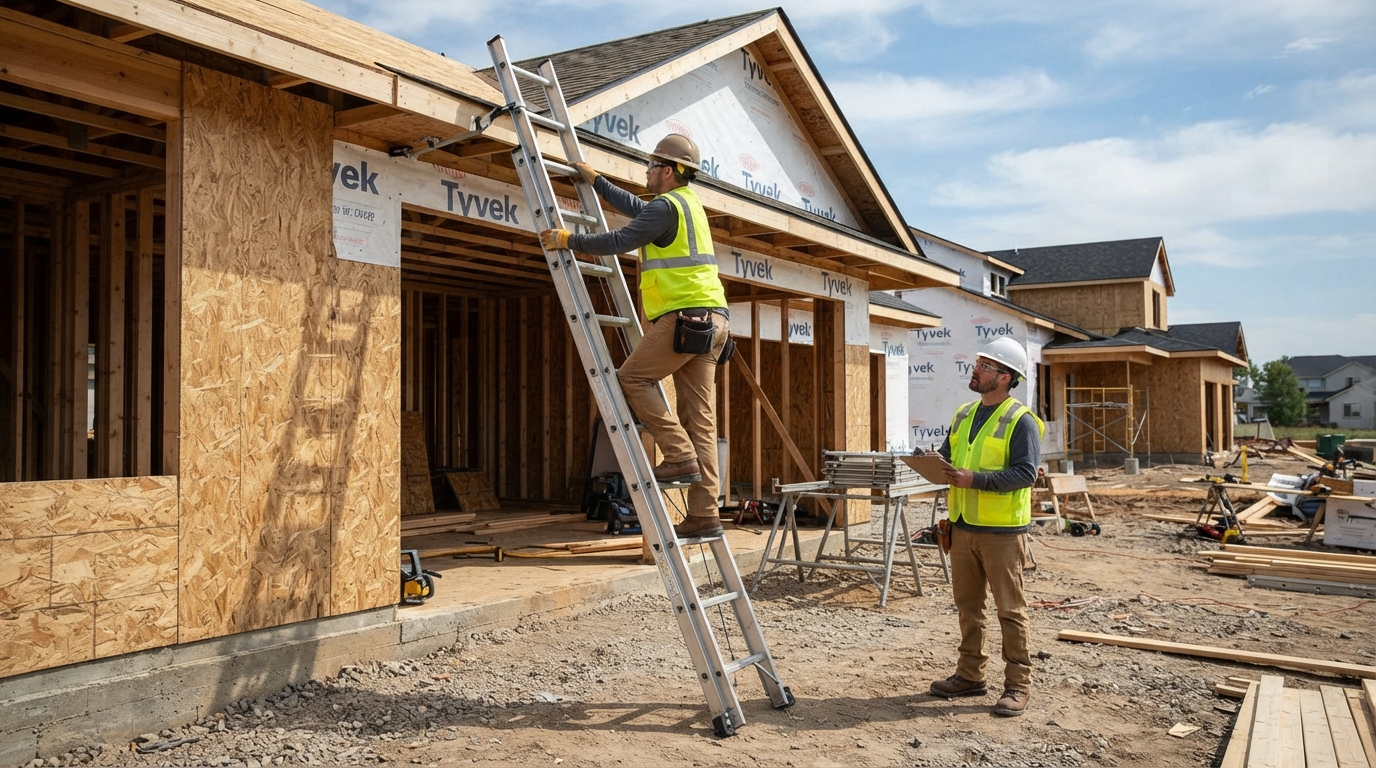
NIOSH identifies roofing, ladder work, and structural framing as common situations where serious falls occur. Residential construction can also create significant exposure because ladders and scaffolding may be used repeatedly as workers move between floors, roofs, walls, and temporary platforms.
A familiar task can become dangerous when crews become comfortable with it. A worker may have climbed the same ladder dozens of times or crossed the same roof area throughout the week. However, wet surfaces, wind, damaged equipment, moved materials, a missing guardrail, or one rushed decision can change the risk quickly.
Supervisors should therefore treat changing jobsite conditions as a reason to reassess fall hazards. A plan created at the beginning of a project may need to be updated as the building changes and new tasks begin.
Fall Protection Must Match the Hazard, Not Just the Job Title
There is no single piece of fall-protection equipment that works for every situation. Guardrail systems, personal fall arrest systems, scaffolds, aerial lifts, covers, positioning systems, and other controls each address different hazards. The correct choice depends on the work being performed, the height, the surface, the available anchorage, and how workers need to move.
That is why fall prevention should begin during project planning rather than after workers arrive at height. OSHA’s campaign urges employers to consider how the work will be completed safely, what tasks are involved, and what equipment is needed. Safety costs should be included when the project is estimated so proper protection is available when crews need it.
Workers should also know how to inspect equipment before use. Damaged harnesses, worn lanyards, bent ladder components, unstable scaffold parts, missing guardrails, and poorly secured covers can turn safety equipment into another hazard. If equipment is defective or the setup is unsafe, the work should stop until the problem is corrected.
Training and Planning Matter Because Equipment Alone Is Not Enough
A harness does not prevent a fall if it is worn incorrectly, connected to an unsuitable anchorage, or used with a system that allows a worker to strike a lower level. Likewise, a ladder is not safe simply because it is available. Workers must understand how to select, position, inspect, and use the equipment correctly.
Training should be specific to the hazards workers actually face. Generic safety presentations can introduce basic principles, but crews also need job-specific instruction about roof edges, floor openings, scaffold access, ladder positioning, anchor points, rescue procedures, and changing conditions.
A Fall-Protection Plan Should Include Rescue, Not Just Arrest
Stopping a worker from hitting the ground is only part of fall protection. If a personal fall arrest system catches a worker, the crew also needs a way to rescue that person quickly and safely. Leaving a suspended worker hanging while everyone decides what to do wastes critical time and can expose rescuers to additional hazards.
A practical rescue plan should identify who will respond, how the worker can be reached, what equipment is needed, and when emergency services should be called. Crews should understand the plan before work at height begins. Employers can also use our Emergency Preparedness page to strengthen broader response planning.
The same principle applies to communication. Workers should know who has authority to stop work, how hazards are reported, and what happens after a concern is raised. A safety program is much stronger when workers can speak up about a missing guardrail or unstable ladder without feeling pressured to continue.
How Employers and Workers Can Prevent Construction Falls
Use a Plan, Provide, Train Approach on Every Jobsite
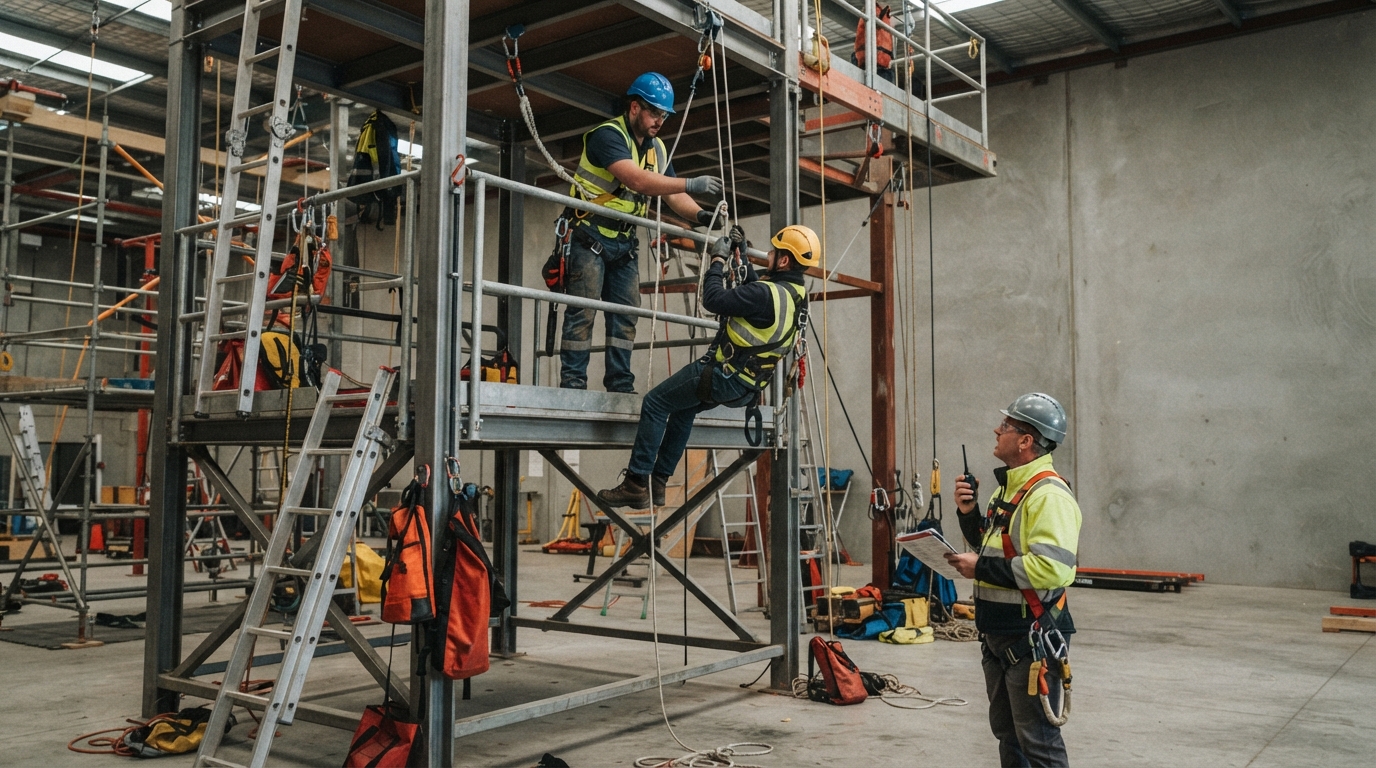
OSHA’s fall-prevention campaign organizes the core strategy around three actions: plan ahead, provide the right equipment, and train workers. The idea is simple enough to remember, but each part needs to become part of everyday operations rather than a once-a-year safety message.
Five Practical Steps Can Strengthen Fall Prevention
1. Identify fall hazards before work starts. Review roof edges, holes, floor openings, scaffolds, ladders, elevated platforms, access routes, and any place where a worker could fall to a lower level. Repeat the review when the jobsite changes.
2. Use the safest practical work method. Whenever possible, eliminate or reduce exposure before relying on personal protective equipment. Guardrails, safer access routes, proper scaffolds, covers, and work planning can prevent workers from reaching a fall hazard in the first place.
3. Provide equipment that fits the task and worker. Fall-protection equipment should be appropriate for the specific job and used according to its design. Workers need correctly fitted harnesses, compatible connectors, suitable anchorages, safe ladders, and properly erected scaffolds where required.
4. Train workers to recognize hazards and use protection correctly. Training should explain not only what equipment to use but why it is required, how it can fail, how to inspect it, and what to do when conditions change. Supervisors should reinforce the training through toolbox talks and regular field checks.
5. Build fall prevention into daily jobsite culture
A stand-down can be useful, but prevention cannot end when the event is over. Crews should discuss hazards throughout the year, inspect equipment, review near misses, and make it normal to stop work when conditions are unsafe.
The 2026 National Safety Stand-Down emphasized these same ideas through toolbox talks, equipment inspections, demonstrations, hazard discussions, rescue planning, and worker feedback. Employers do not need to wait for a national event to use those practices. A short, focused conversation before a high-risk task can identify a problem before someone gets hurt.
Our Safety Checklists page can also be used as a starting point for routine inspections and pre-task reviews. A checklist should not replace judgment, but it can help crews remember recurring issues when work is moving quickly.
fall-prevention guidance
For official fall-prevention guidance, employers and workers can review the Occupational Safety and Health Administration’s Fall Prevention Campaign. OSHA provides planning materials, training resources, and information about the National Safety Stand-Down.
The latest numbers make the priority clear. Construction falls remain a leading jobsite killer, and 389 workers died from falls to a lower level in 2024. Yet federal safety agencies continue to describe these deaths as preventable. The strongest response is to treat fall prevention as part of the job itself: plan the work, provide the right protection, train every worker, and stop when conditions are unsafe.
Construction will always involve changing environments and work at height. That does not mean fatal falls are unavoidable. When employers design safety into the project and workers have the equipment, knowledge, and authority to use it, the job can be completed without accepting a fall as simply part of the risk.